Product family

In-Ground Luminaires

In-ground luminaires mounted flush with the ground that light facades, columns and monuments from the ground upward. The frameless TRI and the ING with a 316L stainless frame; compact MiniRado and wide ColloRado housings, seven lens angles, IP68 and IK10 protection.

Lighting from the ground

Selection guide

TRI or ING? Choose by the ground.

All four luminaires are made with the same LED, lens and protection options; the difference is in the look on the ground and the housing width.

Luminaire Frame Length Power (MC · RGB · RGBW) Reach of the light Look on the ground
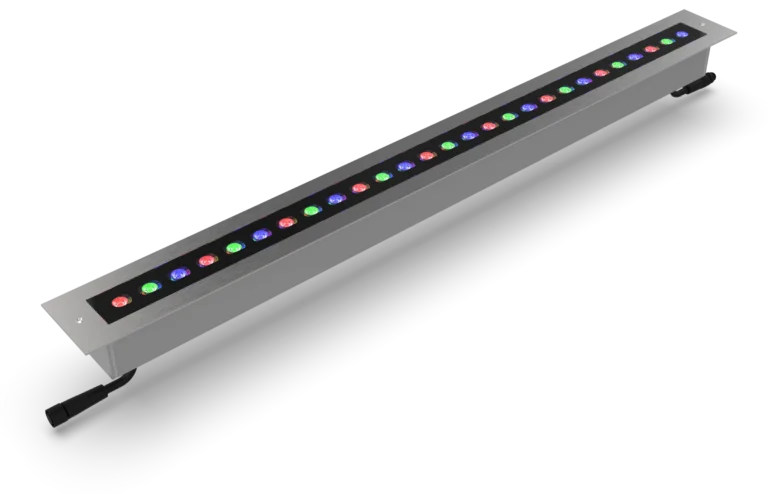
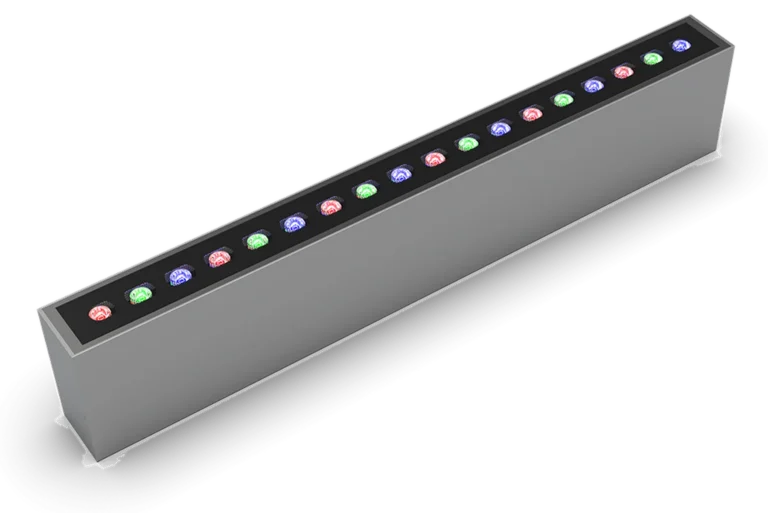
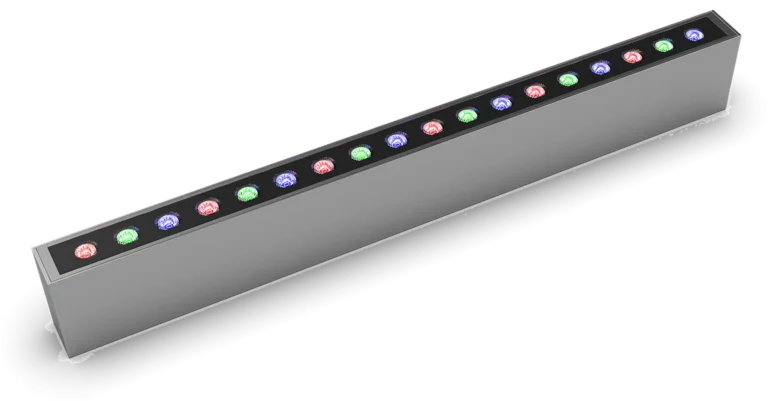
MiniRado TRI Frameless182–1232 mm6–72 · 18–72 · 16–64 WMediumColumns, garden wallsOnly a thin line of light on the surface
ColloRado TRI Frameless182–1232 mm6–72 · 18–72 · 16–64 WFarTall facades, monumentsFlush, a wider line of light
MiniRado ING 316L stainless250–1300 mm6–72 · 18–72 · 16–64 WMediumHistoric buildings, garden wallsAn elegant detail with a stainless frame
ColloRado ING 316L stainless250–1300 mm6–72 · 18–72 · 16–64 WFarMonumental buildings, wide facadesA strong detail with a stainless frame

FAQ

Frequently asked questions about in-ground luminaires.

Write to our technical team to choose the right luminaire for your project together.

What is an in-ground luminaire?

It is a luminaire recessed into the ground that directs light upward. It lights facades, columns and monuments from the ground; by day only its glass top surface is visible on the ground.

What is the difference between TRI and ING?

TRI sits flush with the ground with its frameless design and leaves only a line of light on the surface. ING has a 316L-grade stainless steel frame; it creates a distinct and durable detail on the ground.

How is it installed?

The luminaires are recessed into the ground with an aluminum anchor housing. When the luminaires are mounted in series, a continuous line of light forms on the ground.

What lens angles are there?

15°, 30°, 45°, 60° and 90° symmetrical lenses and 15°×40° and 22°×50° asymmetrical lenses. Narrow angles give a sharp accent on columns and vertical elements; wide and asymmetrical angles give balanced lighting on the wall surface.

Which control protocols does it work with?

The single-color version is controlled via PWM, 1-10V and DALI; the dynamic white, RGB and RGBW versions via DMX512. Voltage options are 220-240 V AC, 24 V DC and 48 V DC.

Message us on WhatsApp