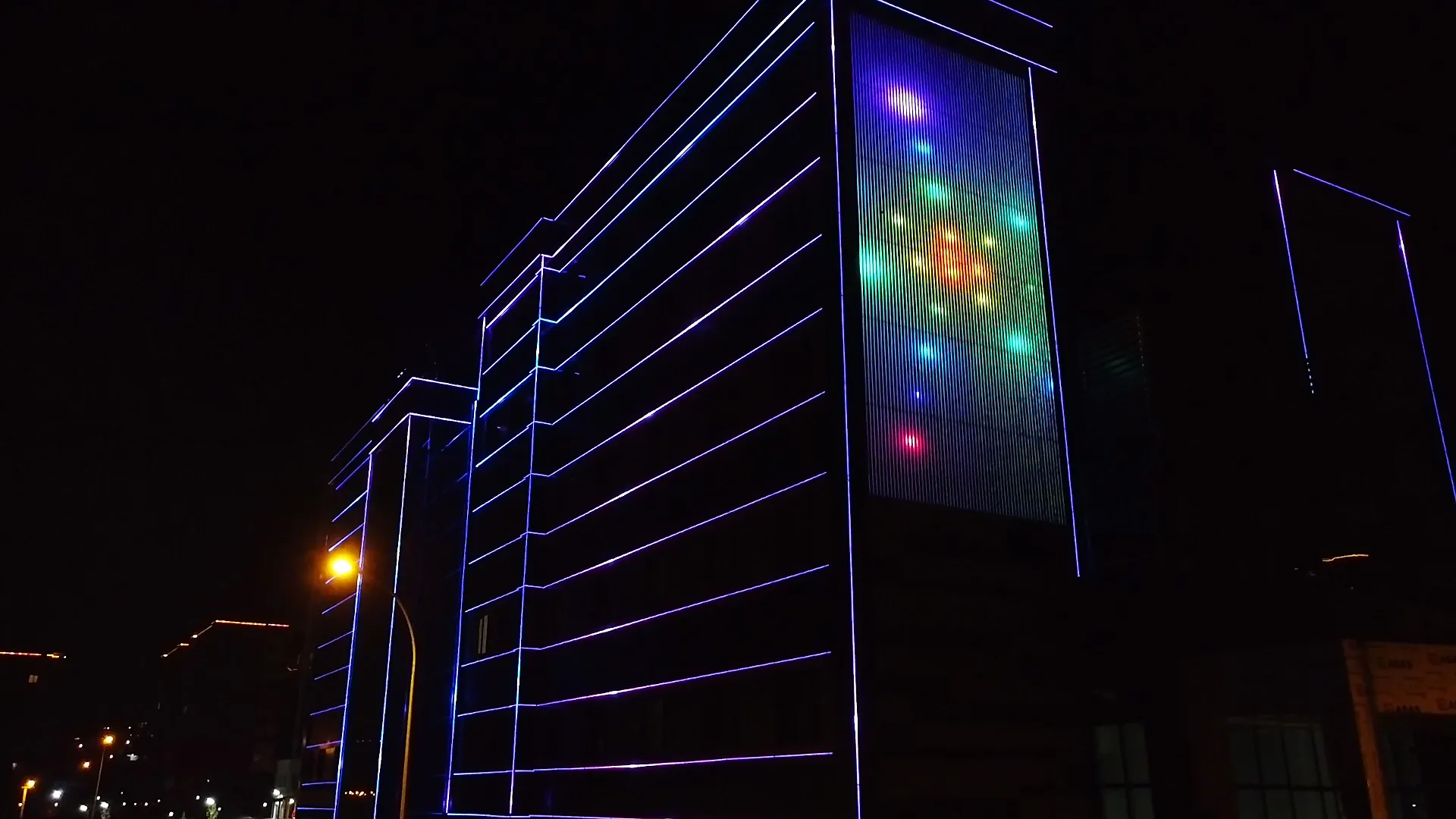
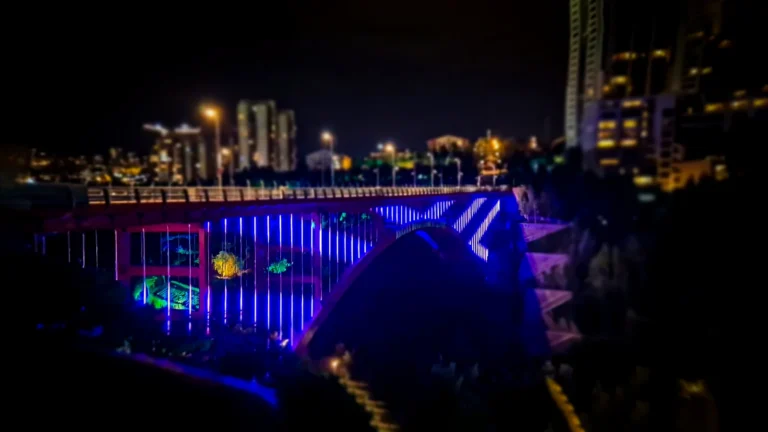
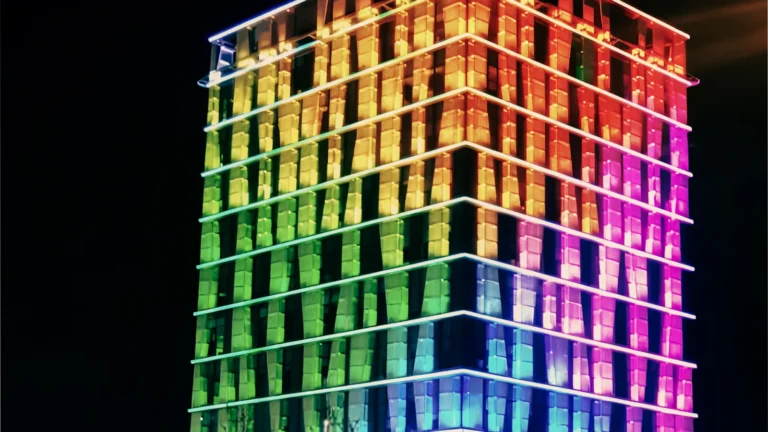
How a building looks at night deserves to be designed as carefully as how it looks by day. Good facade lighting reveals the building’s architecture and gives the city an identity, while keeping energy and maintenance costs under control. In this guide we walk through the typical stages of a facade lighting project in order.
Survey and defining the need
Everything starts with understanding the building and the expectation. What is the building used for, from where and by whom will it be seen at night, and is the lighting meant to be a permanent accent or a look that changes on special days? At this stage facade drawings, current photos and approximate dimensions are collected; if possible, the building is also inspected on site at night.
Lighting concept
The concept determines which elements of the facade will stand out: columns, window surrounds, eaves, a tower or the roofline. Rather than lighting the whole surface evenly, building a hierarchy that makes the architecture legible often gives a more striking and more efficient result. The color of the light, whether it will be static or dynamic, and the scenarios are discussed at this stage.
Luminaire selection
The luminaires that will bring the concept to life are chosen by light type, lens angle, color option and protection rating:
The IP and IK protection ratings of luminaires used outdoors should be checked against the place of installation, and the tone of white light should be chosen according to the material.
Layout and mounting details
The luminaires’ position on the facade, distance from the surface, spacing and tilt angle are determined on the facade drawings. Mounting brackets and cable routes are worked out at this stage, so the luminaires do not stand out on the facade by day and remain accessible for maintenance.
Control infrastructure and power
For static white lighting, a simple timer or light-sensor control may be enough. In color-changing or pixel-controlled systems, protocols such as DMX512, SPI or Art-Net, the number of universes, controller locations and data lines are planned. On the power side, the location of the power supplies, cable cross-sections and voltage drop are calculated.
Calculation and visualization
Lighting calculations and visualizations let decisions be tested before going on site. Illuminance levels, uniformity and how the light will look on the surface are checked at this stage; if necessary, the lens angle or luminaire spacing is changed. In important projects, a trial installation (mock-up) with a few luminaires on site also removes the last question marks about material and color.
Manufacturing, installation and commissioning
The luminaires are manufactured according to the approved project and sent to site. After installation, each luminaire’s address, aiming and operation are checked one by one; scenarios and schedules are loaded into the control system. Final adjustments are always made at night, under real conditions.
Maintenance and sustainability
Long-lasting facade lighting needs regular maintenance: cleaning the glass, checking the connection points and keeping the control system up to date. In addition, decisions such as limiting light spill into the sky and surroundings and lowering light levels late at night both reduce energy consumption and prevent light pollution.
In short: the right result starts with the right questions. Whatever stage your project is at, when you share your drawings, photos and expectations, we can draw up a roadmap that suits you.
Working with Motto Aydınlatma
We run design, local manufacturing, project design and installation under one roof. The process starts with listening to you; then we design the project, prepare our quote and, after your approval, manufacture the luminaires at our facility in Ankara and install them. You can see completed examples on the projects page and get to know our company on our about us page.